It’s a little late for AIDS Awareness Month, but it’s never too late for AIDS awareness! Last month I got to visit the The Alliance for Positive Change — previously AIDS Service Center NYC — and talk with a few of the people that work there.
When you enter the Alliance, you immediately notice the number of people going in and out of the agency and realize that you’re only seeing a slice of the day to day life there. This place is busy. Through the hustle you notice that there is a certain friendly personal acknowledgement between many of the people going in and out and with the staff. What makes it so busy, and sets it apart from other care organizations, is that it’s more than just a care facility that deals with an HIV positive individual and sends them on their way. It actually works with ‘clients’, as they call them, and puts them through a program to help support them with every step of living with HIV. They help navigate a positive diagnosis and all the personal issues that might arise from that. It has a more holistic approach and takes care of the person and not just the disease itself. The care management that the Alliance provides includes helping clients find access to housing, clothing, medical care, Medicaid, Medicare, counseling, legal advice, and job placement. The Alliance also has a number of internal programs such as a coat drive, pantry services, housing services, a pharmacy, and a needle exchange program. There are also support groups for clients from a variety of backgrounds including ones conducted in other languages such as Voix Forte (Loud Voice) for French speakers, and CHAI (Conversation on HIV/AIDS and immigration) for Russian speakers. Because AIDS hits every community and New York City is such a diverse city, the Alliance does not discriminate based on a client’s immigration status. Undocumented immigrants are also eligible for help from the Alliance as well. The culture from the early days, when it was a staff of three, seems to have been maintained even though the staff now tops 100, and it is about personal attention to people that need help the most. In 1990, when ASCNYC first started, it was focused solely on HIV/AIDS, but has evolved to also care for people with chronic diseases. Ironically enough, with new and better treatments, HIV positive people are living longer and developing other chronic diseases associated with old age such as diabetes. The Alliance has evolved in response to this. The Alliance is a work in progress that responds to the needs of the community and an ever changing local and global political environment.
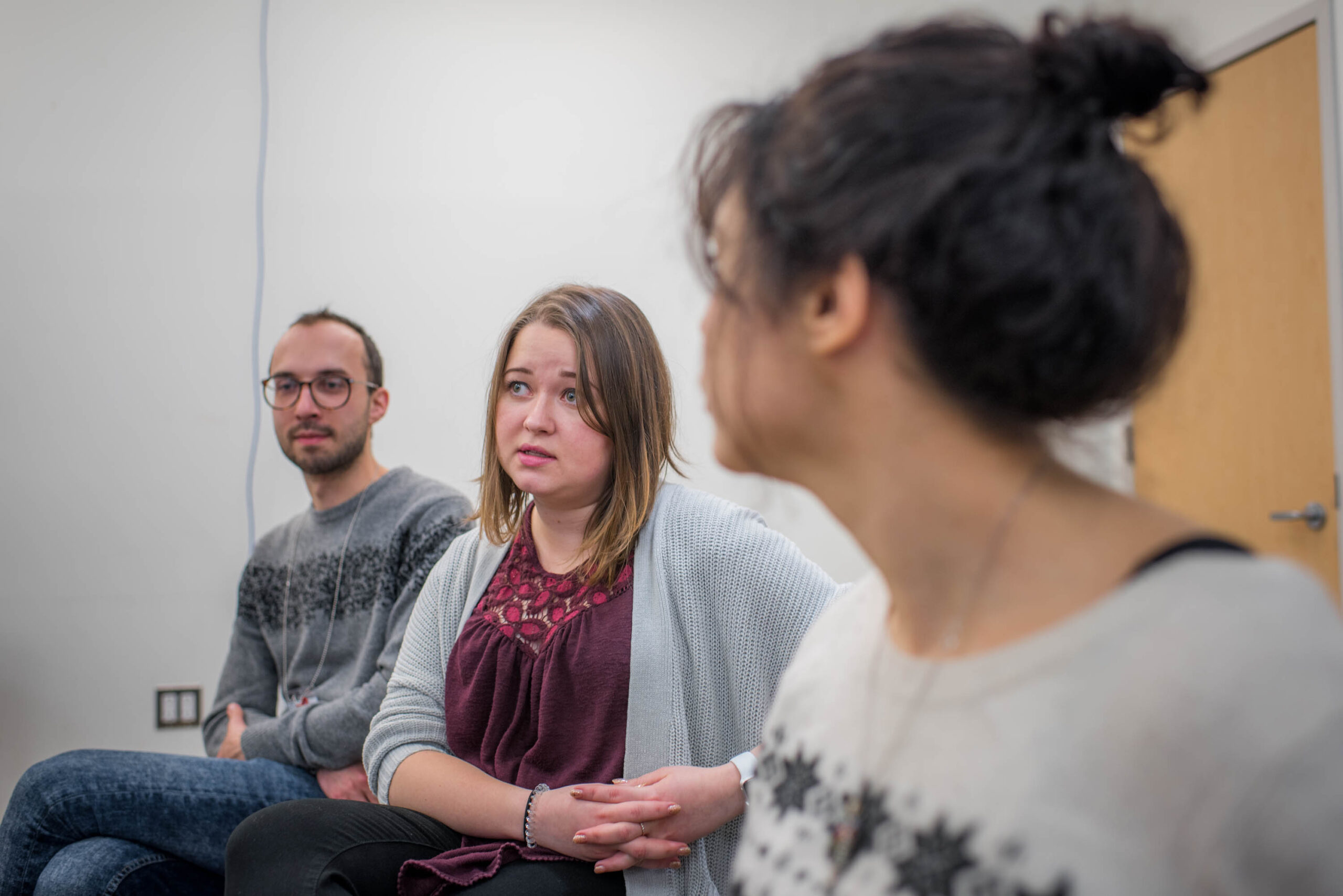
The agency has two major focuses, prevention services, which includes education and testing, and client services which helps people after they have been diagnosed with HIV. Dina Pimenova, Houda Chergui, and Lyosha Gorshkov each work on the client services side.

Dina is a Care Manager at the Alliance and has the responsibility of supporting the Care Coordinators and maintaining a small caseload. In college she studied Medical Anthropology, which naturally led her to working with the Alliance, helping individuals that are suffering from HIV as well as other chronic conditions. Having grown up in the Washington D.C. area, she admits to having somewhat of a sheltered childhood, and is grateful to have the experience to work in this field. It has opened her eyes to things that she never would have imagined before. She loves interacting with the clients and feels that victory comes in many forms, whether it is getting a client’s viral load suppressed, or finding them housing. A sentiment that is echoed by her colleagues is the challenge of not always having a set schedule. At the Alliance the staff and supporting Peer Interns travel all over the five boroughs to meet clients in their homes and in the field. This can prove to be challenging. The job requires a certain type of person, who is dedicated to working with underserved people with a variety of disparate needs. Dina elaborates about the Alliance and the people who she works with:
“One of the greatest things about this agency is that everyone comes from a unique background and experience. The staff I interact with come from all walks of life and parts of the world. Their perspective in addition to my own enables me to connect with clients better and be able to reach more people effectively.”
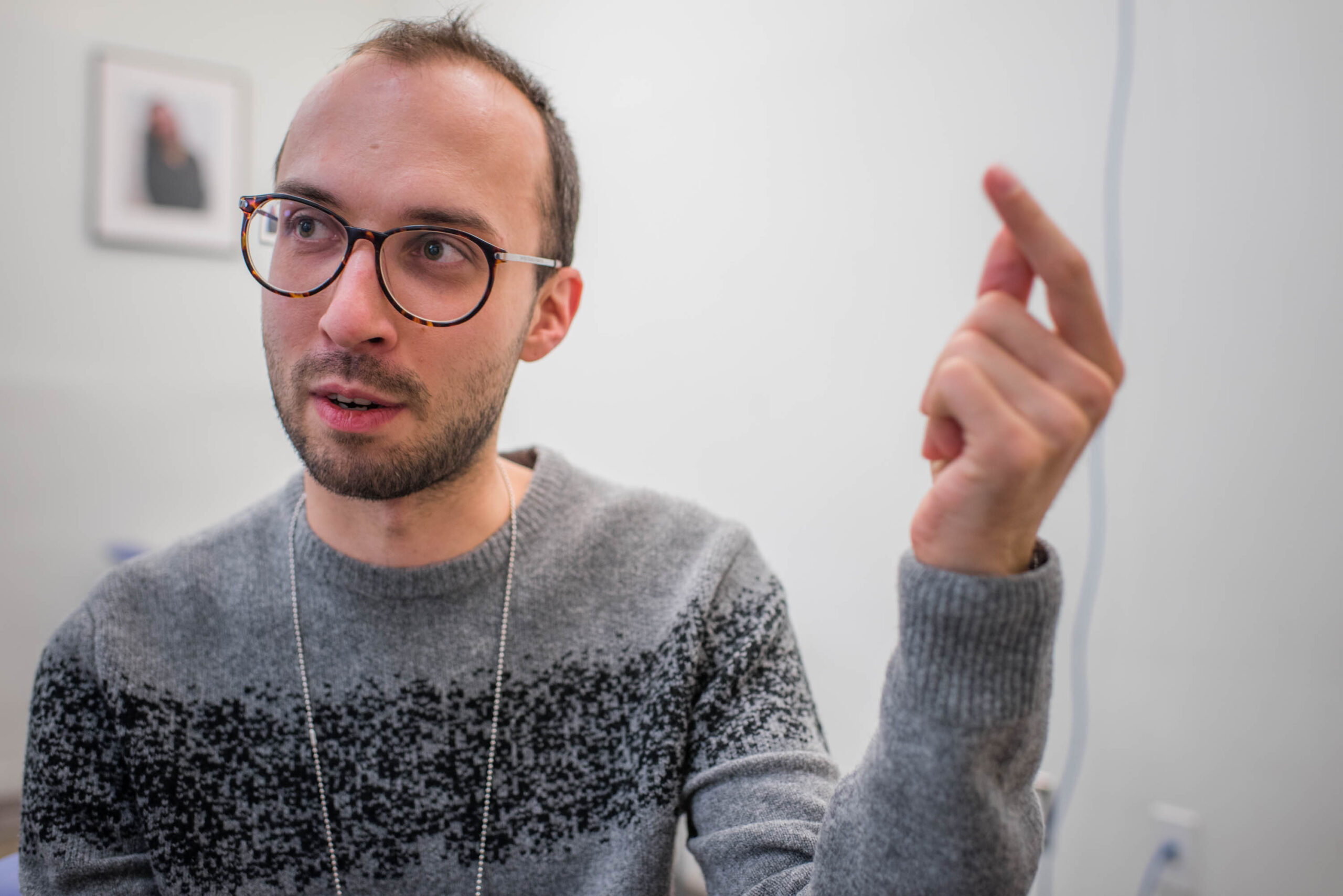
Lyosha is a Care Coordinator. Care Coordinators are responsible for about 50-60 clients each. They maintain contact with the client on a monthly basis, however, depending on the needs of the client, they may need to be more involved. Lyosha began working at the Alliance as a Peer Intern. Peer Interns support the Care Coordinators and are involved in many of the same tasks that Alliance staff do. Although Lyosha is not HIV positive, many of the Peers are and started out as clients. Because of this, Peers can often empathise with the clients on a level that only another HIV patient can. Lyosha was a Peer for about three months and then moved on to becoming a Care Coordinator. Originally from Russia, he has always been active in LGBTQ rights. Russian society is conservative and aggression and hatred towards the gay community is on the rise. Add to that the move in Russia towards abstinence only policies to fight AIDS and you can see why it is important to Lyosha to help underserved people. In talking about the Russian immigrant population, many of whom are asylum seekers because they are gay, Lyosha says this:
“My motivation is to help because they’re my people in some ways, and they were as lost as I was when they got here, so I understand their concerns and fears.”
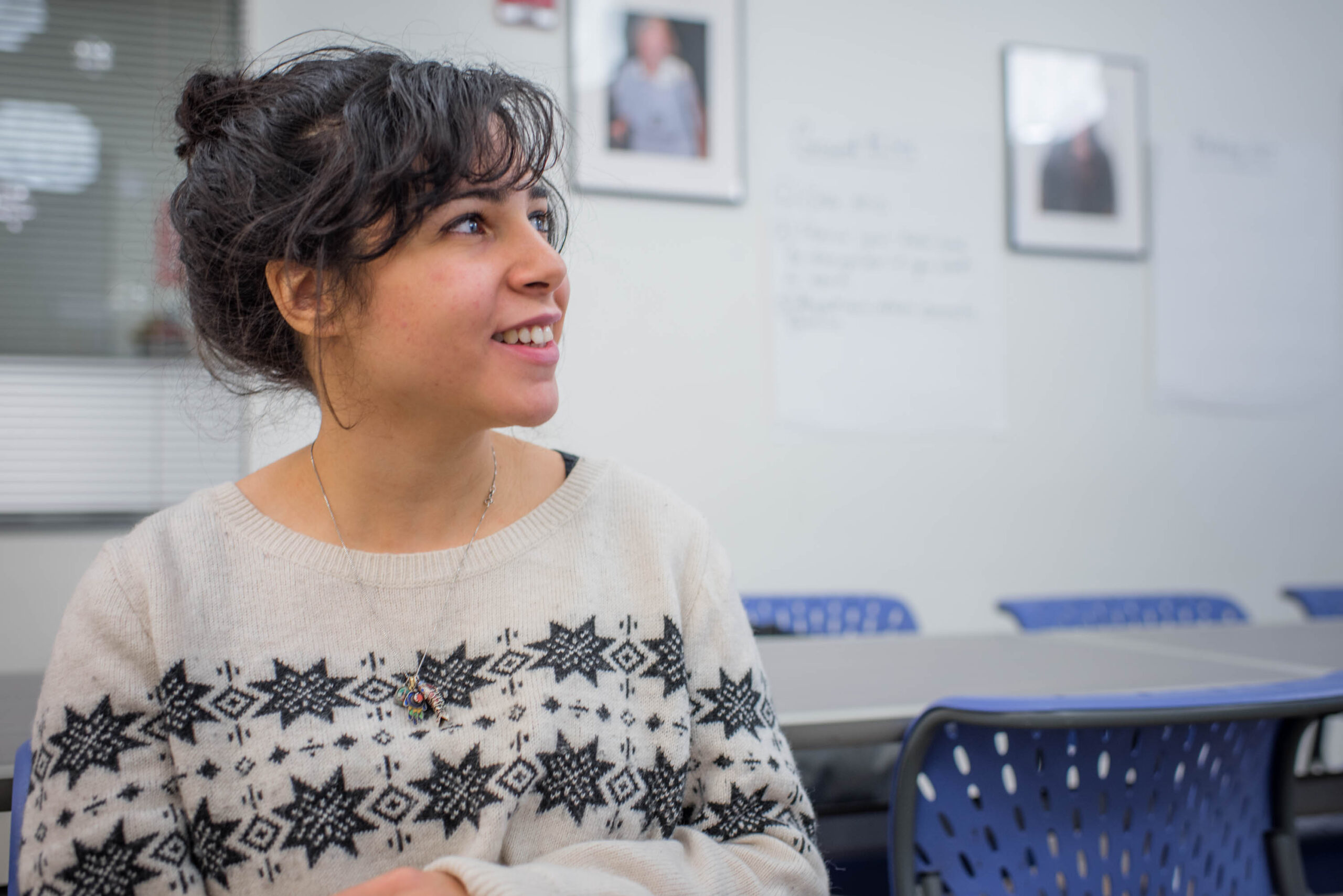
Houda is also a Care Coordinator. Originally from Algeria, she speaks French and felt she could engage the Alliance’s French speaking clients. She recognizes that now that she lives in the U.S. that she is privileged with better access to medical care. This motivates her to participate in the fight to help those that might not be so lucky. When it comes to AIDS and other chronic diseases; once your health goes, other pieces in your life fall out of place. These are the pieces that Houda, and other Care Coordinators at the Alliance help fill. Working at the Alliance she has learned to think on her feet because many times things don’t go as planned when making field and/or home visits. Even with this challenge, Houda feels that her colleagues and even the clients at the Alliance support each other to get the job done stating:
“I enjoy the people whether they be clients or the staff. There’s this notion of support and community. It’s a nice thing to know, especially in such difficult work, that you have some kind of net and support.”
The need for organizations like the Alliance is emphasized by how other countries deal with the AIDS crisis. AIDS is still stigmatized in many parts of the world, more so than it is here in the U.S. While the U.S. still has a long way to go in tackling the AIDS crisis and getting rid of the stigma of those typically affected, the U.S. has made advances. In contrast Russia (where Lyosha is from and Dina was born) is struggling with an explosion of cases, mainly due to an increase in intravenous drug use, governmental policies, and social stigma that work to push people away from wanting to get diagnosed. Violence towards homosexuals is widespread in Russia because it is seen as perverted and many believe if you are gay you are infected. No question about it. Many times when people are diagnosed they lose their jobs and are also refused medical assistance. Add to this that many healthcare workers believe they will get infected through casual contact with an HIV positive patient. When you have a society that is afraid to be tested in fear that they will be ostracized then AIDS will have the opportunity to thrive. On top of that, there is a shortage in care which leaves may untreated, and those that are treated have inconsistent care. Patients are often taken off of their medications raising concerns that new strains of AIDS will arise that are resistant to current treatments. Because of the push for traditional values, methadone, a treatment for intravenous drug users, and needle exchanges have been outlawed. Countries that have programs in place that use methadone and have needle exchanges generally see a lower instances of drug abuse and AIDS transmission. The lack of these types programs has exacerbated the spread of AIDS into the heterosexual community. AIDS hit a milestone of 1 million cases in Russia, which is already epidemic proportions, however many believe the number is much higher, reaching up to 1.3-1.4 million people infected. This is approximately 1% of the Russian population. There is a refusal to take responsibility and look at the real issues in the eye and make hard, compassionate choices. As was stated earlier, the U.S. has made strides, however there are fears with the current political environment that many of the policies that helped get us where we are will be rolled back. Organizations like the Alliance not only help people with HIV live longer, better lives, but they also serve to stop the spread of HIV and stem it from being the crisis that it once was. On December 1st there was a dedication ceremony for the AIDS Memorial Park in Manhattan. The theme that kept arising was that we were ending AIDS in NY by 2020. This didn’t mean eradicating the disease all together, but stopping new cases and bringing the viral load of those who have it to undetectable so that it doesn’t spread. 2015 was the first year of no transmission from mother to child of HIV in NYC. This was a huge success in bringing down the numbers of those infected. If we roll back funding for agencies like the Alliance, and push at-risk people back into the shadows, and opt for abstinence-only policies, HIV will have the opportunity to be what it once was here in the U.S. This should not be an option.
The Alliance has found the crossroads of compassion, care, and treatment that makes it a place that people can feel safe at with conditions that fundamentally change their lives. The Staff at the Alliance helps bring humanity to a situation that no one should confront alone and has become indispensable in many people’s lives.
Look up the Alliance if you need care or support, or if you want to give back to the NYC community:
